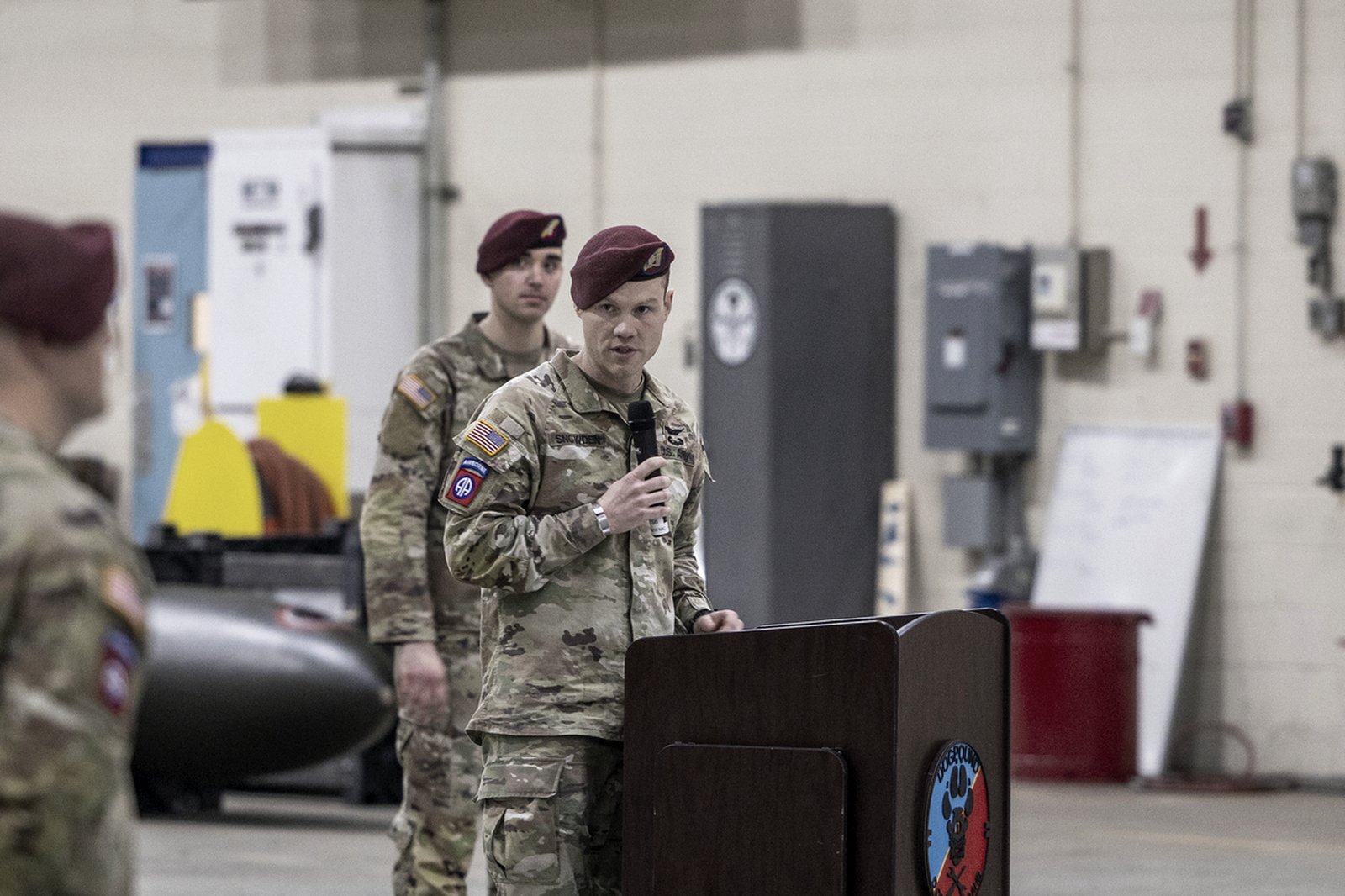
This spring, 51 Labs ran a DoD SkillBridge internship a little differently. We didn’t hand our intern a lane or a task list. We handed him our hardest problems and the runway to solve them, and we judged him on what he shipped, not the hours he logged.
Thirteen weeks later, he’d left behind six systems the whole team still uses. Here’s how it worked, and why we think it’s the right way to run SkillBridge.
| New to SkillBridge? It’s a U.S. Department of Defense program that lets transitioning service members spend their final months of duty in a civilian internship, at no salary cost to the host company. The company gets a proven operator. The service member gets real civilian experience before they separate. |
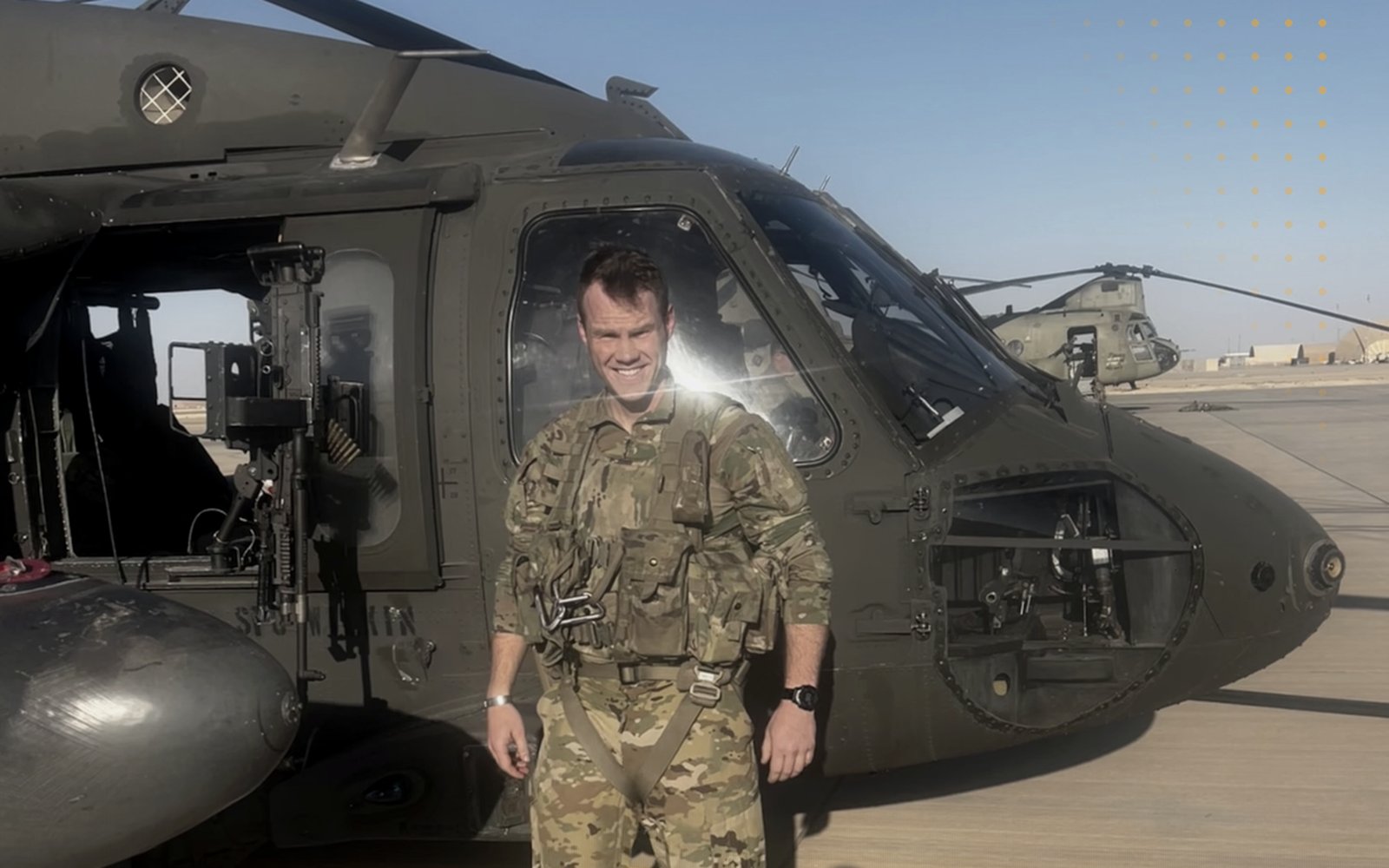
Meet the SkillBridge Intern: A Black Hawk Pilot
SkillBridge doesn’t send a blank slate. It places transitioning service members in a civilian internship for the final months of their service, and the people it sends have already run real operations under real pressure.
Ours was an Army captain with 8 years as an aviation officer and UH-60M Black Hawk pilot. He’d most recently commanded a 120-soldier maintenance company responsible for 30 aircraft, and he’s a West Point mechanical engineering graduate. In uniform, he consolidated 2,000 scattered aviation assets into a single inventory and cut restock delays in half, and he coordinated the aviation response to Hurricane Helene, moving 1.5M+ pounds of supplies in under two weeks.
None of that work waited for perfect instructions. It started with a problem and a bias toward building the fix.
That instinct is the raw material every SkillBridge hire brings in the door.
How 51 Labs Runs a SkillBridge Internship
51 Labs is a small, fast team that runs on a real operating system, so our intern sat close to the founders and saw the whole business: the sales pipeline, the client cadence, the finance and bookkeeping, the CRM, and the project management that holds it together.
The program ran on three things.
- Initiative: Where a process was slow, we trusted him to rebuild it, not just flag it.
- Runway: He got real problems and the room to solve them his way.
- A results bar: He was judged on what he shipped. That combination is the part most internships never offer, and it’s the reason the output was real.
“Nobody handed me a task list. They handed me problems and trusted me to build the fix. That trust is the whole point of SkillBridge.” — Thomas Snowden
The Six Systems Thomas Built in 13 Weeks
This is what initiative and runway produce when the bar is results. One operator, 13 weeks, a reusable system left behind in every lane he touched:
- AI outreach engine: researches, scores, and ranks our target market across roughly 174 firms, then drafts client-ready briefs.
- Brand-voice QC reviewer: the team now runs it on any draft before it reaches a client.
- Operator playbook: 93 cards across 7 domains, with a 30-day onboarding track.
- Search and AI-visibility strategy: a full audit, a 90-day roadmap, owners, and KPIs.
- Content system: long-form posts each paired with a LinkedIn version, plus a monthly calendar.
- Budgets and reporting: dashboards and templates that turn raw data into executive-ready reports.
The Results: 2x Outreach and 75% Faster Audits
Range only matters if it moves the business. This did.
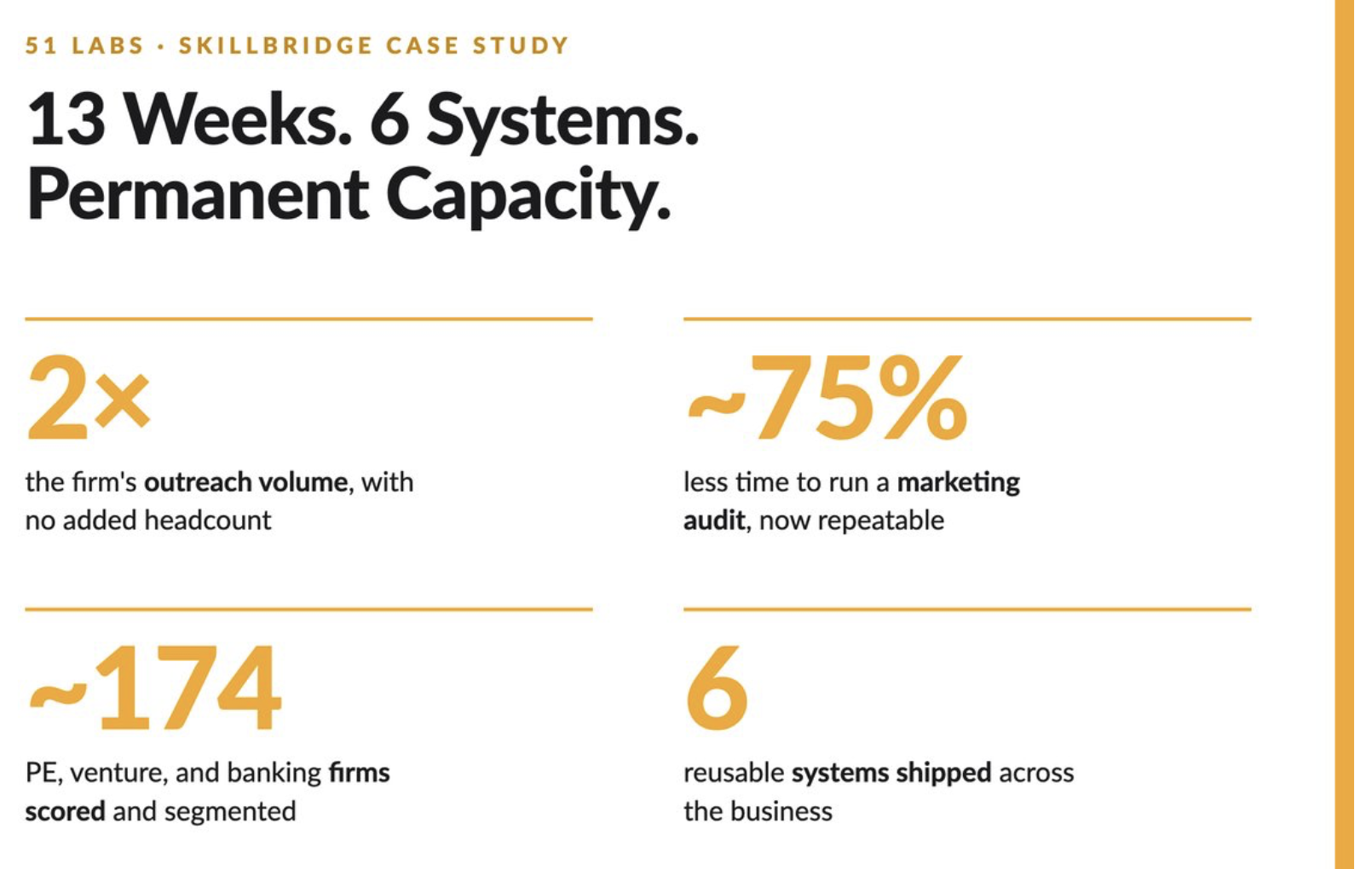
Thomas doubled our outreach email volume with no added headcount. He cut the time it takes to run a marketing audit by roughly 75%, and made it a repeatable process. He quantified and segmented a target market of around 174 firms. And by the end, the whole team had moved onto AI for everyday work. Because he built each piece as a documented, repeatable system, the value didn’t leave when he did.
“Thomas didn’t complete tasks and leave. He left systems that still run. We did not rent 13 weeks of effort. We added permanent capacity.” — Jordan Selleck, Co-Founder & Co-CEO, 51 Labs
Why Military Skills Transfer to Business
The military trains leaders to operate on intent. A commander describes what good looks like, and the leader on the ground figures out how to get there without waiting to be told each step. Hand that instinct a business problem and you get the same result. “Our outreach is slow” becomes a working pipeline. “Our best practices live in people’s heads” becomes a 93-card playbook.
That’s the bet inside every SkillBridge hire.
Service members already bring the work ethic. The host company’s only job is to translate it into the language of go-to-market, operations, and growth, then get out of the way. Our intern is headed to Duke Fuqua next, with goals in finance or operations.
“The work felt familiar. Only the mission was new.” — Thomas Snowden
Should Your Firm Host a SkillBridge Intern?
The lesson for any firm weighing a SkillBridge intern is simple: the talent is already proven, and it responds to trust. Give a transitioning officer real ownership and a hard problem, and they build things that stay.
If your firm is thinking about a SkillBridge intern, that’s a conversation Jordan Selleck is glad to have. He can walk you through how we structured ours, what worked, and why we keep coming back to the program.