You spent years building your track record. Your deck is tight. Your thesis is differentiated. And then an LP visits your website… and everything falls apart.
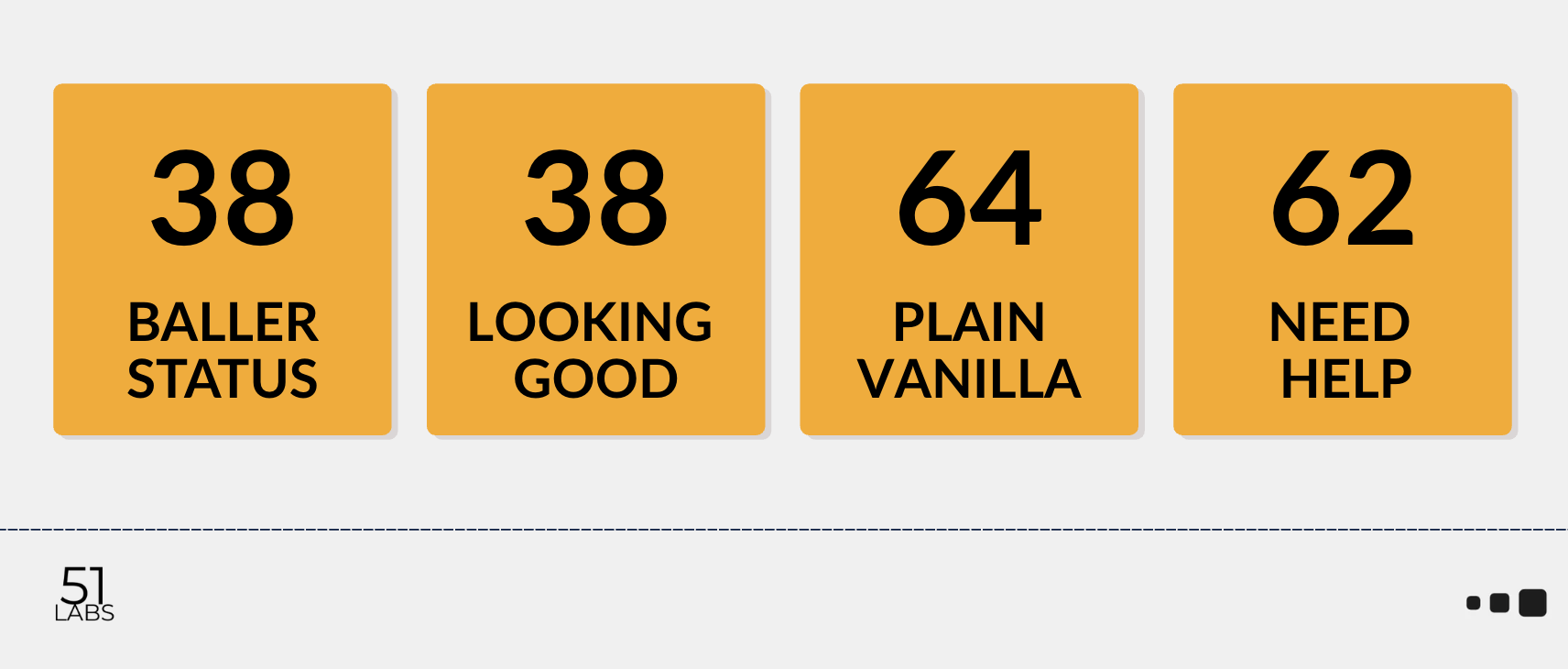
We reviewed 202 Emerging Manager websites—the good, the bad, and the ones that made us question what year we were in. And we scored them across clarity, credibility, and design quality. Here’s what we found:
Why “Baller” Status Matters for PE Firms
A lot of Emerging Managers treat their websites as a background asset—something you “have to have,” but not something that actively drives outcomes. In reality, it’s often the first real interaction an LP has with your firm after they hear your name at a conference, get a warm intro, or find you on LinkedIn.
LPs are not reading your website in detail. They’re scanning for three things: what you do, why you’re credible, and why they should care right now. If those answers aren’t obvious within seconds, the default reaction is to move on.
| Research shows that first impressions online are formed almost instantly—in some cases, in as little as 50 milliseconds. By the time you think the process is starting, a decision is already made. |
This is where many firms lose momentum.
The issue isn’t always that the website looks bad. Sometimes, it’s that it’s unclear, generic, or trying to say too much without saying anything specific. The result is friction. In a process where LPs are reviewing dozens of managers at once, even small friction is enough to make them close the tab and move on to the next deck in their inbox.
Breaking Down the Four Emerging Manager Website Tiers
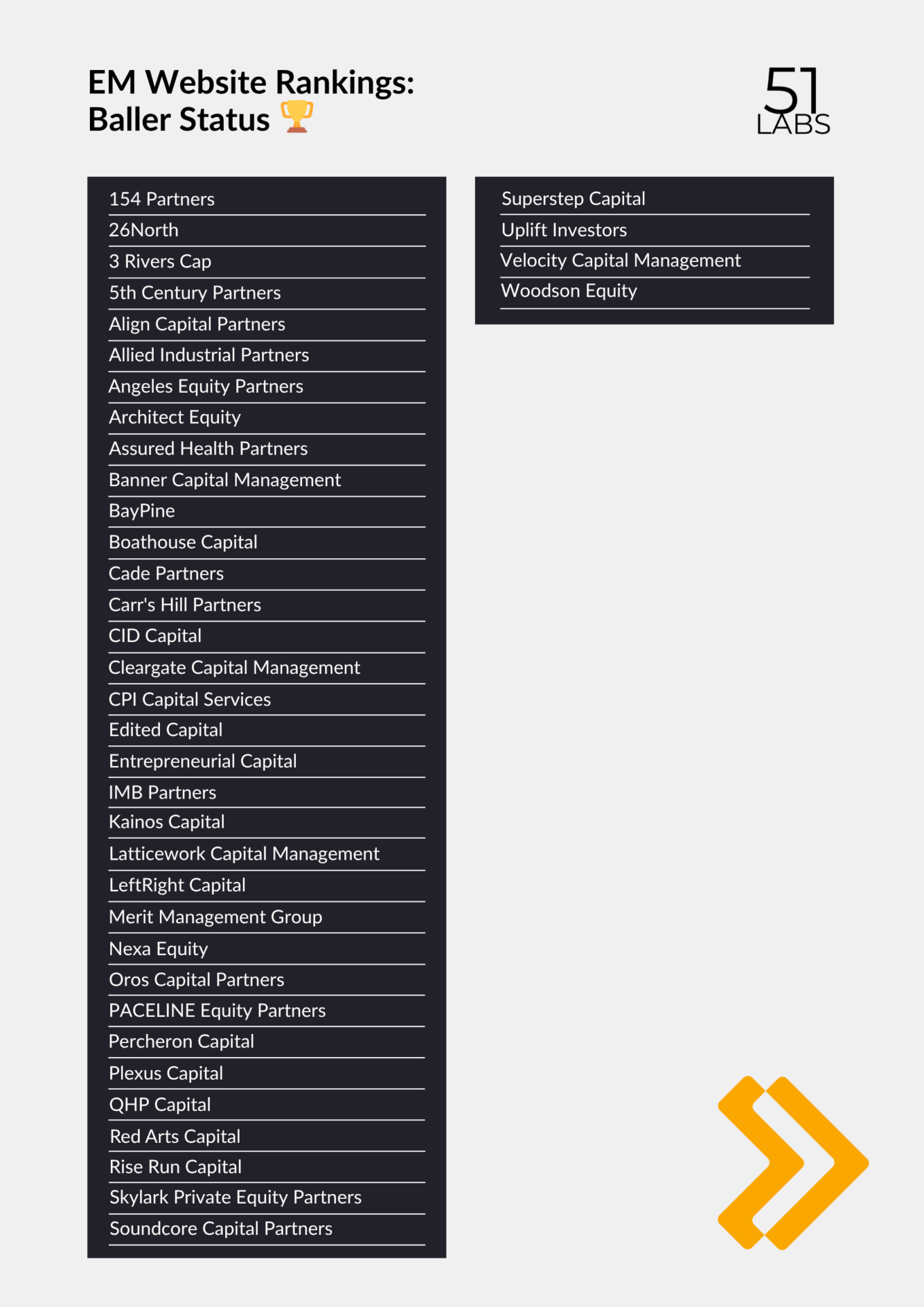
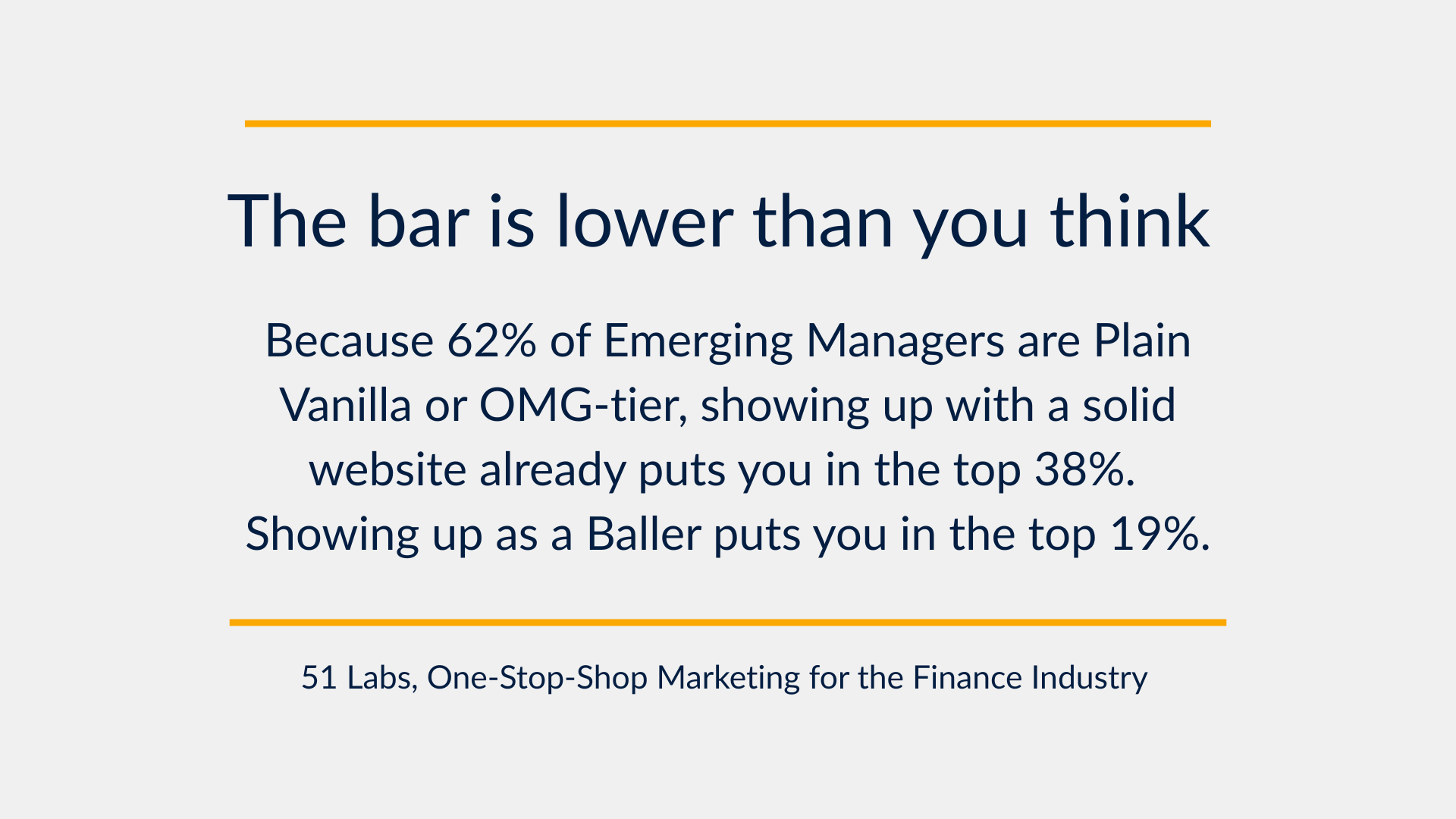
🏆 Baller Status — 19%
These managers treat their website like a core piece of LP collateral.
A clear value proposition above the fold. You immediately understand what they do, where they focus, and why it matters. The investment thesis is explained in plain English—no vague language, no filler.
Baller-tier sites feel clean, modern, and intentional. Strong typography, consistent branding, good spacing. The brand feels distinct, not like a template or every other manager. Technically, the experience is smooth and everything works: fast load times, mobile-optimized, no broken links.
The common thread: these firms design their sites with a clear audience in mind. It’s easy to navigate, easy to understand, and easy to trust.
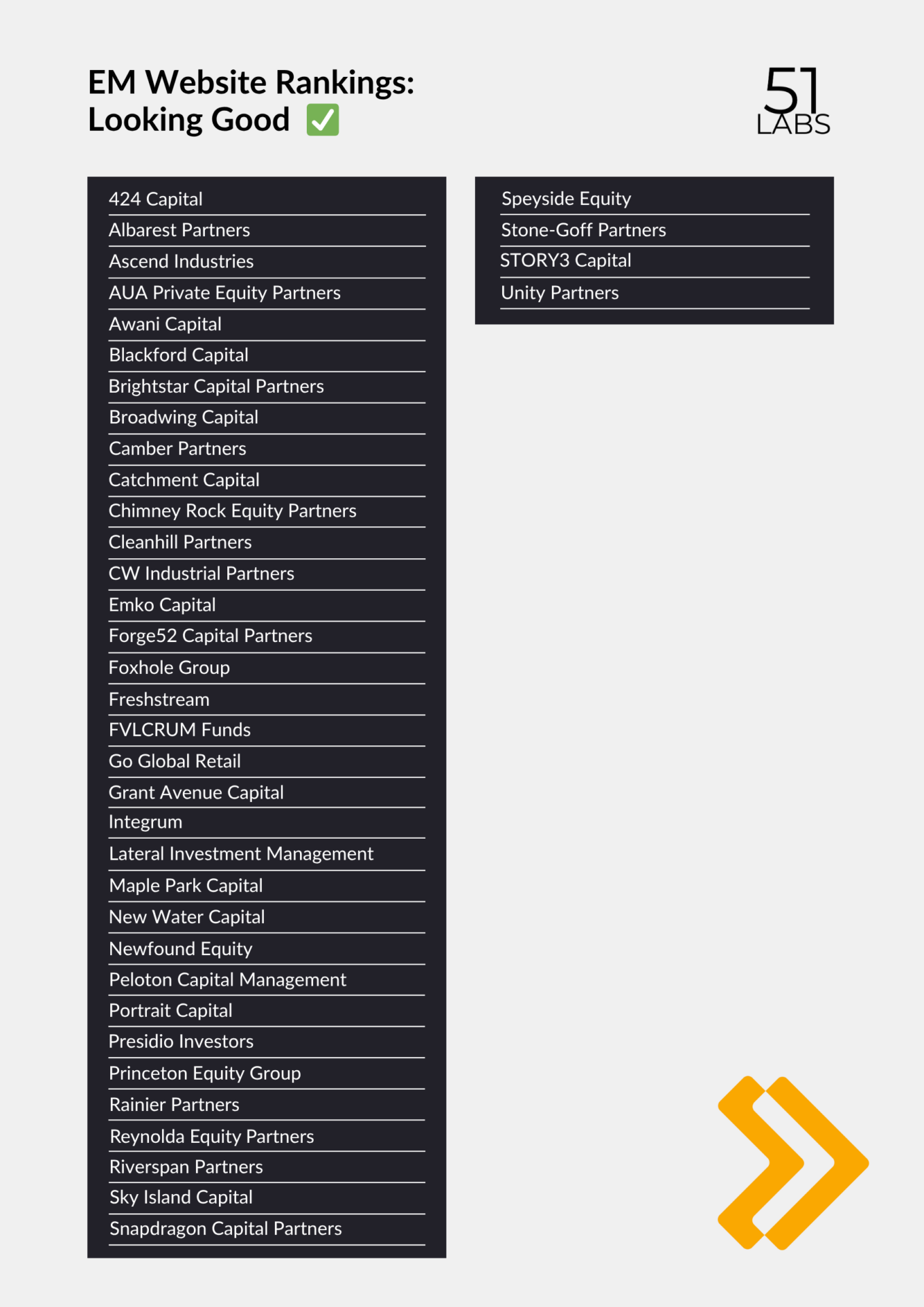
✅ Looking Good — 19%
A strong foundation. The core content is there, the design is clean, and an LP can quickly understand what the firm does.
These sites feel credible and well put together. The positioning is clear, the experience is smooth, and there’s enough substance to support a first impression. In a few places, there’s room to go a layer deeper, for example making the brand feel more distinct.
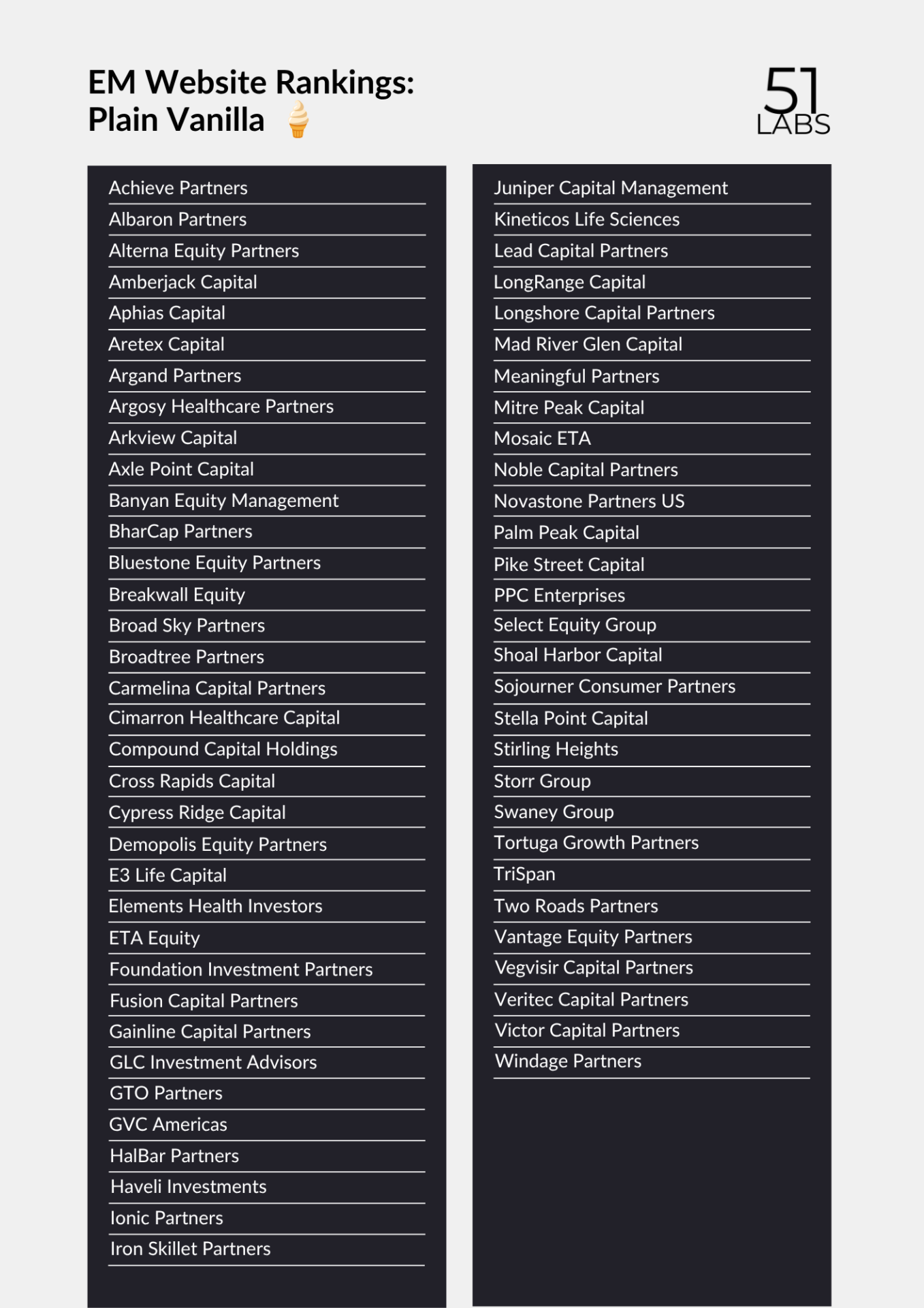
🍦 Plain Vanilla — 32%
This is where most Emerging Managers live.
These sites are functional. Nothing is broken, but nothing stands out either.
The copy tends to be generic: familiar phrases, broad positioning, and language that could apply to almost any fund. The visuals are often stock or interchangeable, and the overall design feels more templated than intentional. These websites just don’t give an LP a reason to remember the firm.
The upside is that the foundation is already there. With more specific messaging, stronger positioning, and a more defined visual identity, these sites can become much more effective without a full rebuild.
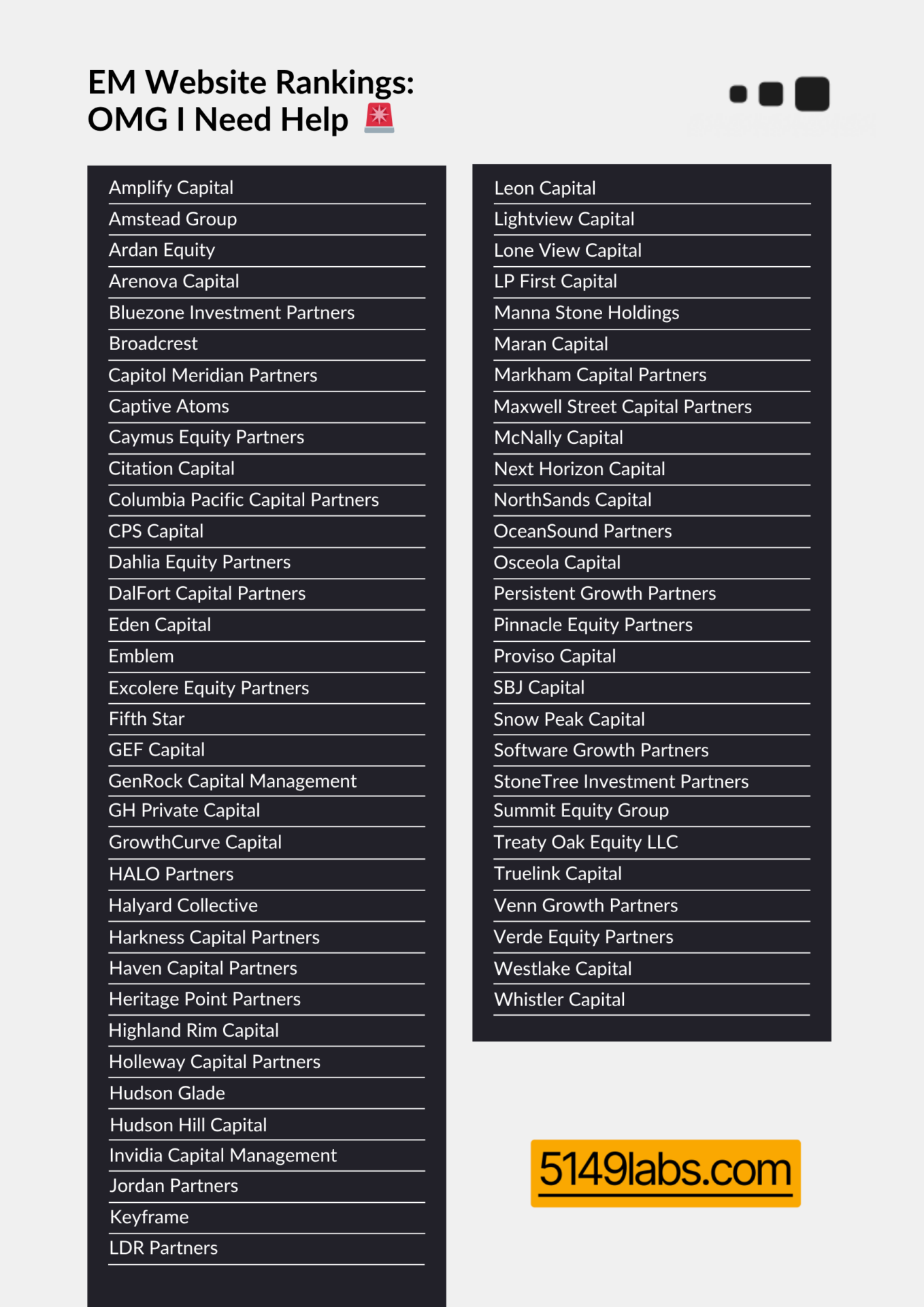
🚨 OMG I Need Help — 30%
This tier is usually what happens when the website hasn’t been treated as a priority for a while.
The design often tells the same story. Outdated layouts, older fonts, inconsistent spacing, and a general “last touched a few years ago” feel. Pages that load slowly or don’t render properly. Team bios that look like they were copied from a LinkedIn profile years ago and never revisited.
Together it creates the impression that the site hasn’t kept up with the firm.
The good news is that this tier is also the most fixable. With a focused update, like cleaning up functionality, modernizing the design, and refreshing the content, these sites can quickly move back into a place where they support the story instead of undermining it.
Read more: Will LPs See You (or Your Competitors) First? Emerging Manager LinkedIn Rankings
What Baller Emerging Manager Websites Do Right
The Baller-tier sites share a few non-negotiable traits that every manager at any stage can replicate.
How They Look & Feel
- A distinct visual identity. They don’t look like templates. Color, typography, and layout feel consistent and intentional. You could recognize the firm without seeing the logo.
- Clean, modern design. Good spacing, readable type, restrained use of visuals. Nothing feels crowded or outdated. The site feels current, which subtly reinforces that the firm is too.
- Consistency across pages. Every page looks and feels connected. No mismatched styles, random layouts, or “this was added later” sections.
- Visual hierarchy that guides attention. It’s obvious where to look first, second, third. Headlines, sections, and supporting content are structured to make scanning easy.
- Thoughtful use of imagery. Minimal reliance on generic stock photos. When visuals are used, they feel relevant—portfolio, team, or abstract but on-brand.
- Strong technical hygiene. HTTPS, fast load times, mobile optimization, no broken links. The site works without friction.
How They Read
- Above-the-fold clarity. A visitor understands what you do within seconds—no scrolling, no decoding. Strategy, focus, and positioning are immediately obvious.
- A thesis that actually explains your edge. Written in plain English, not abstractions. It answers “why you” in a way that feels specific and defensible, not interchangeable.
- Clear credibility anchors. Something concrete backs up the story—portfolio companies, track record snapshots, press, or recognizable relationships (where appropriate). It gives the LP a reason to believe quickly.
- A single, focused CTA. One next step, clearly defined. No competing actions or clutter.
The ROI Case for Fixing This Now
We know what the objections are. You’re busy. You’re raising. You’ll get to it “after the close.”
But now look at it through a fundraising lens.
If your fund is targeting $100M–$250M, you’re probably closing somewhere between 15 and 30 LPs—anchors and smaller commitments combined. If a better website meaningfully moves even 2–3 of those conversations from “cold” to “warm,” the ROI on a $40–70K website project is not hard to calculate.
It’s not a marketing expense. It’s a fundraising tool.
“But Do LPs Really Care About our Website?”
The answer isn’t as simple as “yes” or “no.”
A website won’t win you an allocation. It won’t replace your track record, your relationships, or your pipeline. If you’re waiting for inbound deals because of a homepage redesign, you’ll be waiting a long time.
What a website does, when it’s done well, is act as a validation layer.
Every serious interaction eventually loops back to it:
- an LP hears about you and looks you up
- a founder gets introduced and checks your site before taking the next call
- an intermediary vets you and clicks through to see how you present yourself
In each case, there’s a short window where they form a judgment. Not a final decision, but a directional one, whether this feels credible, or whether something feels off.
Established firms have brand equity working for them. The name alone carries weight before anyone clicks a link.
If you’re raising Fund I or Fund II, that advantage doesn’t exist yet. There’s a natural trust gap. And your website is one of the few places where you can close it on your own terms.
- control the narrative
- show how you think
- demonstrate how you operate
A Quick Way to Assess Your Own Website
If you want a quick gut check, look at your homepage and ask:
- Can someone understand what we do in under 10 seconds?
- Is our strategy clearly differentiated or broadly stated?
- Do we show proof, or just describe capabilities?
- Does the site feel current and active?
- Would I personally trust this team with my own capital?
Where does your website rank? We’re opening up a limited number of free website audits for Emerging Managers. 15 minutes, honest feedback, actionable priorities.
