If a shoot feels chaotic, rushed, or underwhelming in the edit, the issue usually isn’t production quality but insufficient pre-production clarity.
Whether you’re partnering with an agency or running the process internally, this guide outlines how to prepare effectively so shoot day runs smoothly and the final product is clear, differentiated, and aligned with your strategic objectives.
Poor Planning Is Costly
Shoot days are expensive.
You’re paying for crew time, equipment, location fees, and most critically, the time of senior executives who rarely have hours to spare.
What makes a poorly prepared shoot even more expensive is waste. Wasted takes because the questions weren’t thought through. Wasted setups because no one mapped the story to the schedule. Wasted footage that looks fine in the moment but doesn’t fit the edit later.
The pressure to “just get something” often results in generic B-roll and surface-level soundbites that don’t differentiate your firm or tell a compelling story about a portfolio company. You end up with content that technically exists but doesn’t do much.
Step-by-Step: How to Prepare for a Video Shoot
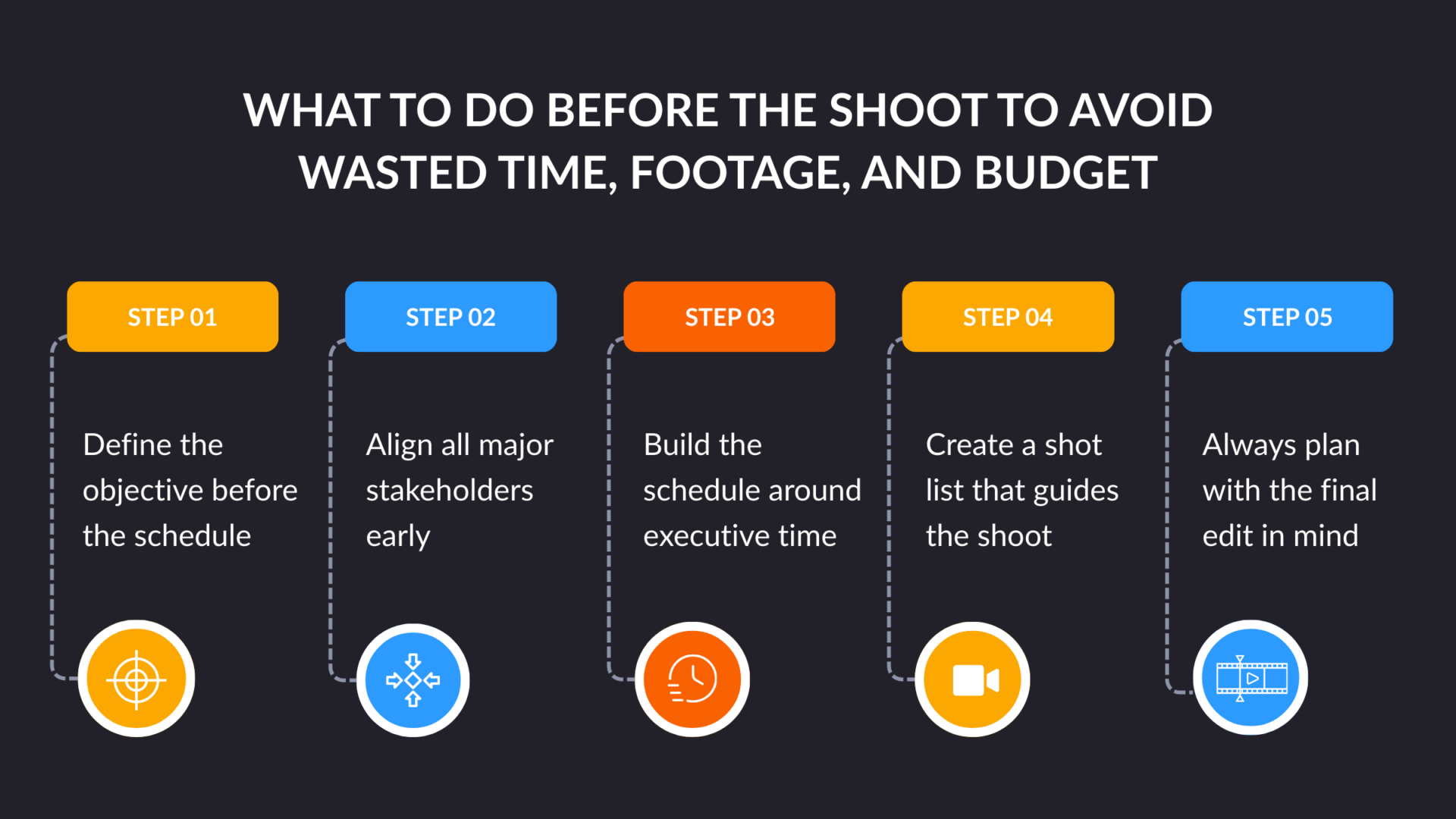
Step 1: Define the Objective Before You Define the Schedule
Before booking a crew or selecting a date, clarify the purpose of the video.
Who is the audience?
What decision or perception should the video influence?
Where will it be used — AGM, fundraising, sell-side, website, LinkedIn?
Without alignment on objective, everything downstream becomes reactive. Interview questions drift. Messaging becomes generic. The edit lacks cohesion.
Document the core narrative in writing. A short brief is sufficient, but it should clearly define:
- The audience
- The key message
- The proof points required
- The intended tone
Step 2: Align Stakeholders Early
Video projects often involve multiple partners, operating executives, and portfolio leadership teams. Misalignment rarely shows up in planning meetings, but surfaces on set and during post production.
Before the shoot:
- Confirm messaging with decision-makers
- Share a clear outline of what will be filmed
- Address sensitivities or constraints in advance
If portfolio company employees are participating, brief them properly. Explain what the video is for, what topics they’ll discuss, and roughly how long they’ll be needed.
Providing sample questions ahead of time is not about scripting responses. It allows people to think through answers and speak more confidently on camera.
Step 3: Build a Schedule That Protects Executive Time
Executive time is typically the most expensive component of a shoot. Your schedule should reflect that.
Film priority interviews early in the day. Avoid stacking critical segments back-to-back without buffers. Build 15–20 minute gaps between major blocks to absorb delays.
Block calendars ahead of time so everyone is clear on:
- When they’re needed
- Where they should be
- Who they should report to on site
A tightly packed schedule without flexibility creates rushed interviews and missed shots. A realistic schedule reduces stress and improves performance on camera.
Step 4: Create a shot list with purpose
Shot lists aren’t just for the crew. They’re a communication tool that ensures everyone agrees on what’s being captured, why it matters, and how each shot supports the overall story, storyboard, and key messages.
For each item, note what it’s meant to convey. A “team collaboration” shot isn’t just people at a table—it’s demonstrating culture, communication, decision-making. Knowing the “why” behind a shot keeps the day focused and intentional.
Step 5: Plan the edit before the camera rolls
Good editors can work with almost anything, but great footage makes their job exponentially easier.
Think about how scenes will connect in the edit. Plan for:
- Clean interview audio
- Multiple angles or coverage where possible
- Transition moments (someone walking into a room, opening a door, sitting down)
Think in sequences, not just individual clips. If you’re filming a portfolio company’s operations, capture the flow of the process, how one step leads to the next, rather than a collection of unrelated shots.
When the shoot is designed with the edit in mind, the final video comes together faster and tells a clearer story.
When Things Change on Set (and They Will)
Even with excellent preparation, something will shift. An executive runs late. Weather changes your outdoor shoot. A location isn’t quite what you expected.
The difference between a shoot that adapts well and one that falls apart comes down to the foundational work done upfront. When everyone involved understands the story being told and the message being conveyed, it becomes easier to pivot without losing focus.
Adjustments might include reordering interviews, changing locations, or swapping a planned shot for something that better fits the moment. Flexibility doesn’t mean abandoning the plan—it’s about having enough clarity to make smart decisions when the original plan shifts.
This is where experienced production teams showcase their value. They’ve seen enough shoots to know what’s negotiable and what’s not. They can reframe a setup in real time without sacrificing the outcome.
Pre-Production Tips for Private Equity Videos
Different types of videos require slightly different pre-production approaches. By understanding the audience for each, you can tailor your planning process to ensure the final product aligns with your goals.
- AGM videos: These often involve tight timelines and multiple stakeholders. Nail down the narrative early, and make sure you have strong data points to support the story.
- Firm overview and portfolio company highlights: These require a balance of high-level messaging and specific proof points. Know your differentiators before the shoot, and identify the people who can speak to them credibly.
- Sell-side videos: Buyers want to see proof, not promises. Capture concrete examples of value creation, operational improvements, and leadership strength.
- Portfolio company case studies: These are storytelling opportunities. Focus on the problem, the approach, and the results. Interviews should feel specific, not generic.
- Testimonial videos: Authenticity matters more than polish. Prep your subjects with themes, not scripts, and create an environment where they feel comfortable speaking candidly.
Make Your Next Shoot Count
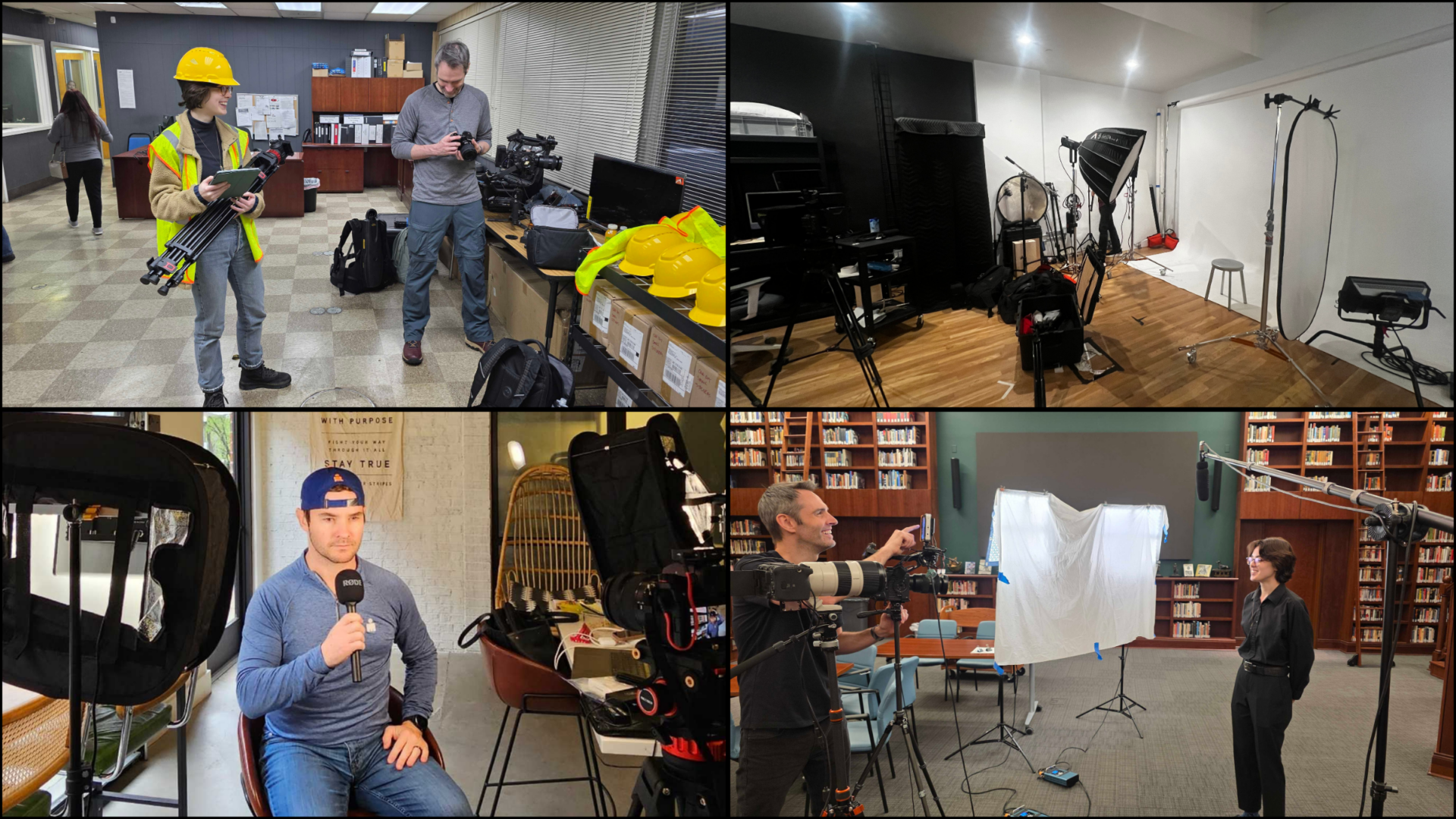
You don’t need a Hollywood budget or an in-house production team to create video content that works. You just need to respect the process and put in the work upfront.
Start by getting clear on the story you’re telling. Align your stakeholders early. Build a realistic plan that accounts for the realities of shoot day. And treat every shot as part of a larger narrative, not just a box to check.
If you’re planning video projects—whether for fundraising, portfolio marketing, or investor communications—the time you invest in preparation will determine whether you walk away with footage you’re proud to use or content that just exists.
If you’re looking for a clear, structured process from discovery to the final edit, that’s what we do every day. We’d love to chat about your upcoming projects and help you figure out the best way forward.
